
Jensen Huang's Push for Open-Weight AI Models Is Really a Bet to Expand Nvidia's Total Addressable Market
 2026-08-04 10:10
•Micah Zimmerman •The Motley Fool
••••• •••••
2026-08-04 10:10
•Micah Zimmerman •The Motley Fool
••••• ••••• Axe Cap view
Nvidia's Open AI Push: More Than Altruism
Nvidia’s strategy to support open AI models aims to grow its chip demand by expanding the AI market broadly.
Jensen Huang’s public campaign for open-weight AI models isn’t just about being friendly to the AI community. It’s a calculated move to boost Nvidia’s chip sales as AI adoption spreads across industries. By encouraging openness, Nvidia bets on more companies using AI in varied ways, all needing powerful GPUs. This strategy could backfire if more efficient models emerge that cut hardware needs, or if Chinese competitors gain significant ground, but for now, it aligns with ongoing AI investment globally. For South Africa, this matters because Nvidia’s role underpins tech upgrades in local enterprises and increases demand for high-performance computing infrastructure. While direct SA market plays on Nvidia are limited, the USD/ZAR can serve as a proxy—strong global AI momentum may keep the rand volatile but with a slight upward bias if foreign tech investors stay optimistic. this is just our opinion and not financial advice
Watch the USD/ZAR closely for tech-driven inflows and consider selective exposure to SA tech-linked financials like Naspers or Prosus, given their indirect sensitivity to global tech trends. Avoid direct overexposure until Nvidia’s strategy proves it can fend off efficiency innovations and geopolitical threats.
- USD/ZAR
- Naspers
- Prosus
- Emergence of hyper-efficient AI models reducing GPU demand
- Increased competition from Chinese chipmakers impacting Nvidia’s dominance
6/10
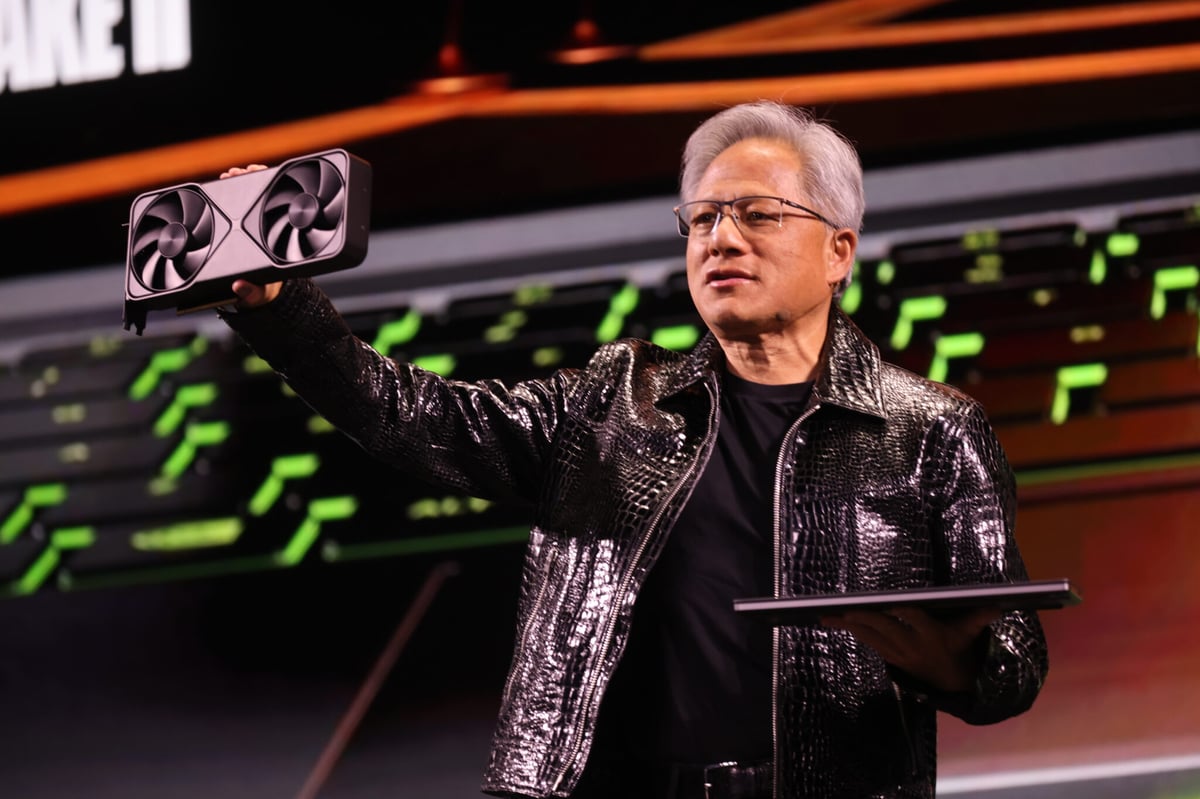
Jensen Huang's advocacy for open-weight AI models appears principled but is strategically designed to expand Nvidia's market. By democratizing AI across the economy, Nvidia ensures broader demand for its chips regardless of which model wins. While this strategy risks enabling competitors like China and potentially creating hyper-efficient models that need less computing power, it positions Nvidia to benefit from universal AI adoption.
Our take is based on reporting first published by The Motley Fool.